Every winter, high natural gas prices in New England become a favorite industry talking point: how bananas it is that people so close to prolific Appalachian gas supplies pay some of the highest delivered prices in the world, and how much better off they’d be if myopic environmentalists would stop blocking gas pipeline capacity. Toby Rice — the gas industry’s de facto spokesman — frequently talks about how crazy it is that his mom in the Boston area doesn’t have gas service.
But as I’ll show, New England LDCs are well-served with existing capacity, while the unit economics of space-heating conversions only pencil out with a subsidy from existing gas customers. Power generators, meanwhile, only need additional gas on a couple dozen days per winter and don’t have a rate base to pass through the costs of additional capacity. In the long run, the region’s consumers would be better off backstopping more LNG imports into Canaport LNG1 than paying for additional 365-day pipeline capacity.
Who holds capacity into New England?
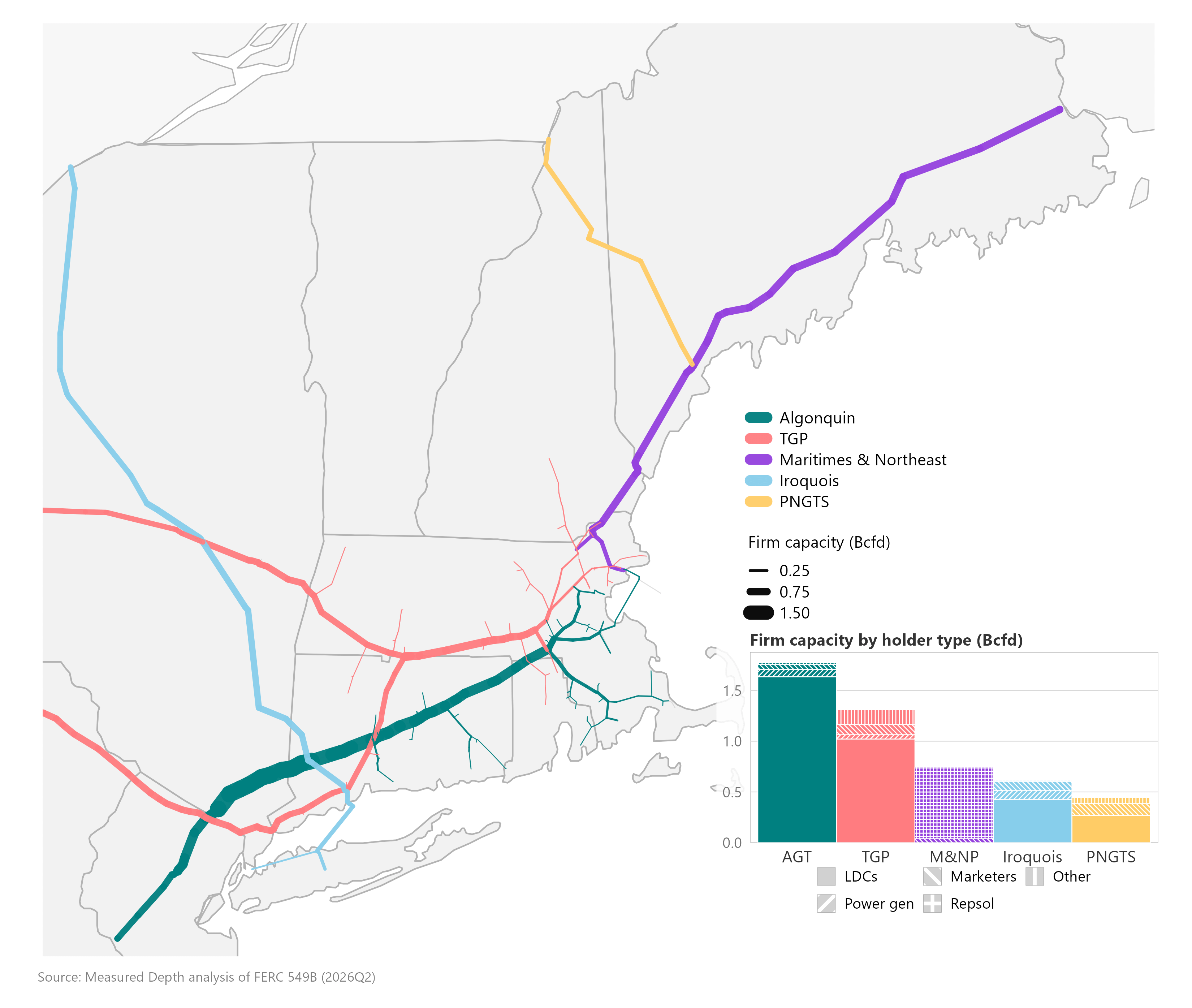
For the first time since 2017, a new pipeline expansion into New England is on offer: Algonquin’s Project Beacon recently launched an open season. Algonquin is one of five pipelines bringing gas into New England on three major routes:
Iroquois and Portland Natural Gas connect to the TC Mainline at the border and bring gas south into New England.
Intermittently, Maritimes & Northeast brings gas south from Canaport.
TGP and Algonquin bring gas northeast from Appalachia.
Repsol holds most of the capacity on M&NP, and LDCs hold ~80% of the contracted capacity on the other four.
Figure 1 | Pipeline capacity into New England
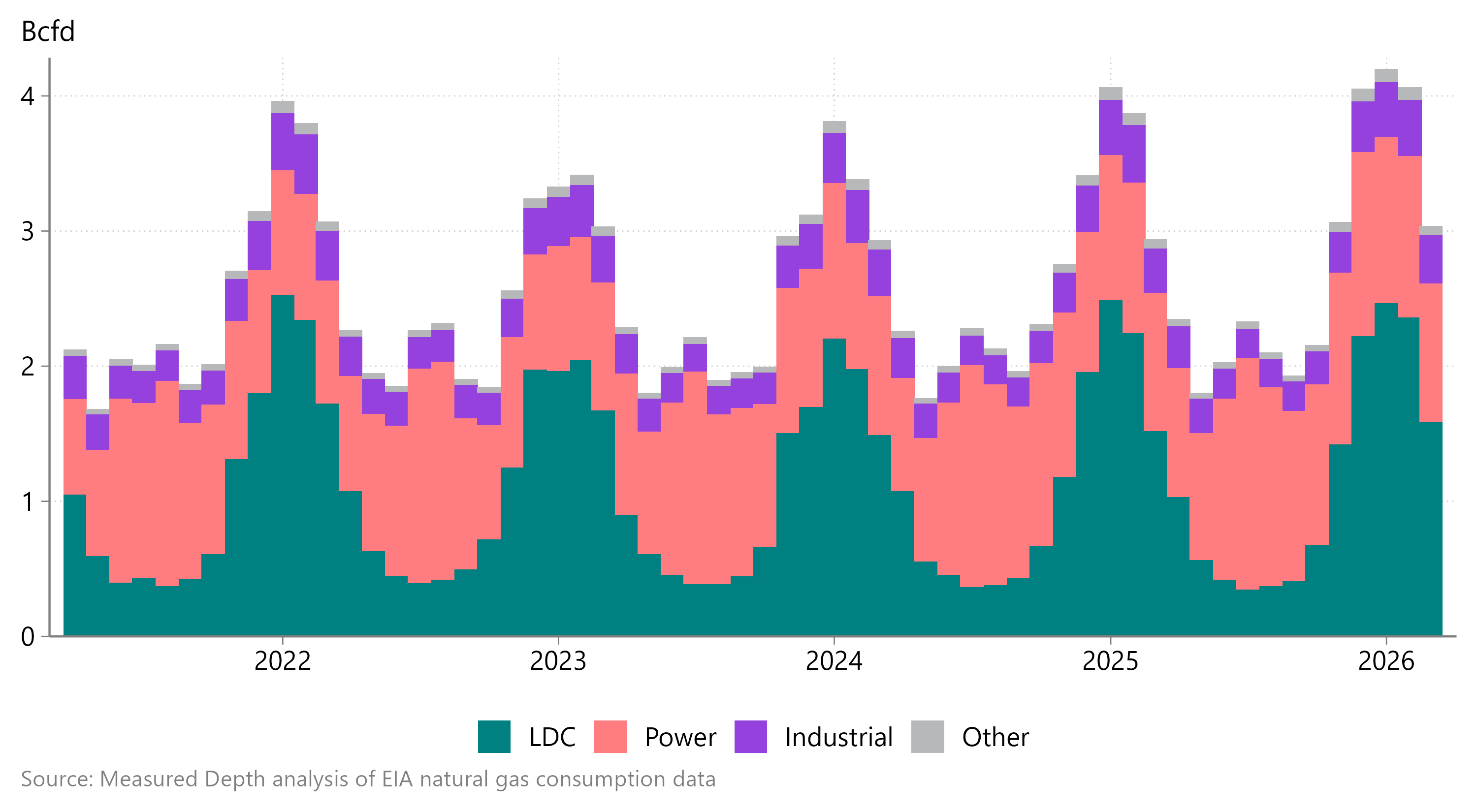
Even though New England power generators hold just ~200 MMcfd of capacity into the region, they burn ~1.3 Bcfd on average. Because utilities contract for peak-day needs, their capacity is under-utilized most of the year, meaning that most days it is available for merchant power generators to free ride.
Figure 2 | New England gas demand by sector